
Hawai‘i Island
Hawaiʻi Island is unique in that it is the only Hawaiian island with ongoing active volcanic eruptions. However, humans are still by far the leading cause of wildfire ignitions. The majority of wildfires on Hawaiʻi Island are caused by human error or arson, especially near developments, power line right of ways, and along roadsides.
Fire Today
Rainfall follows the typical pattern of the Hawaiian Islands, with more rain along the eastern windward coast. Mauna Kea and Mauna Loa create a rain shadow that results in drier conditions on the western leeward coasts. Most of the former sugar plantation lands are on the wetter windward side of the island, along the Hāmākua Coast. Despite this location, there is a long history of fires in the area. It was the large 1901 Hāmākua coast fire that was the impetus for keeping wildfire records in Hawaiʻi. >> READ MORE
On the leeward side, the Kohala area is particularly fire-prone. This drier region with large areas of fallow pasture and agricultural land has a high rate of ignitions vis-a-vis human infrastructure, as well as more regular large fires.
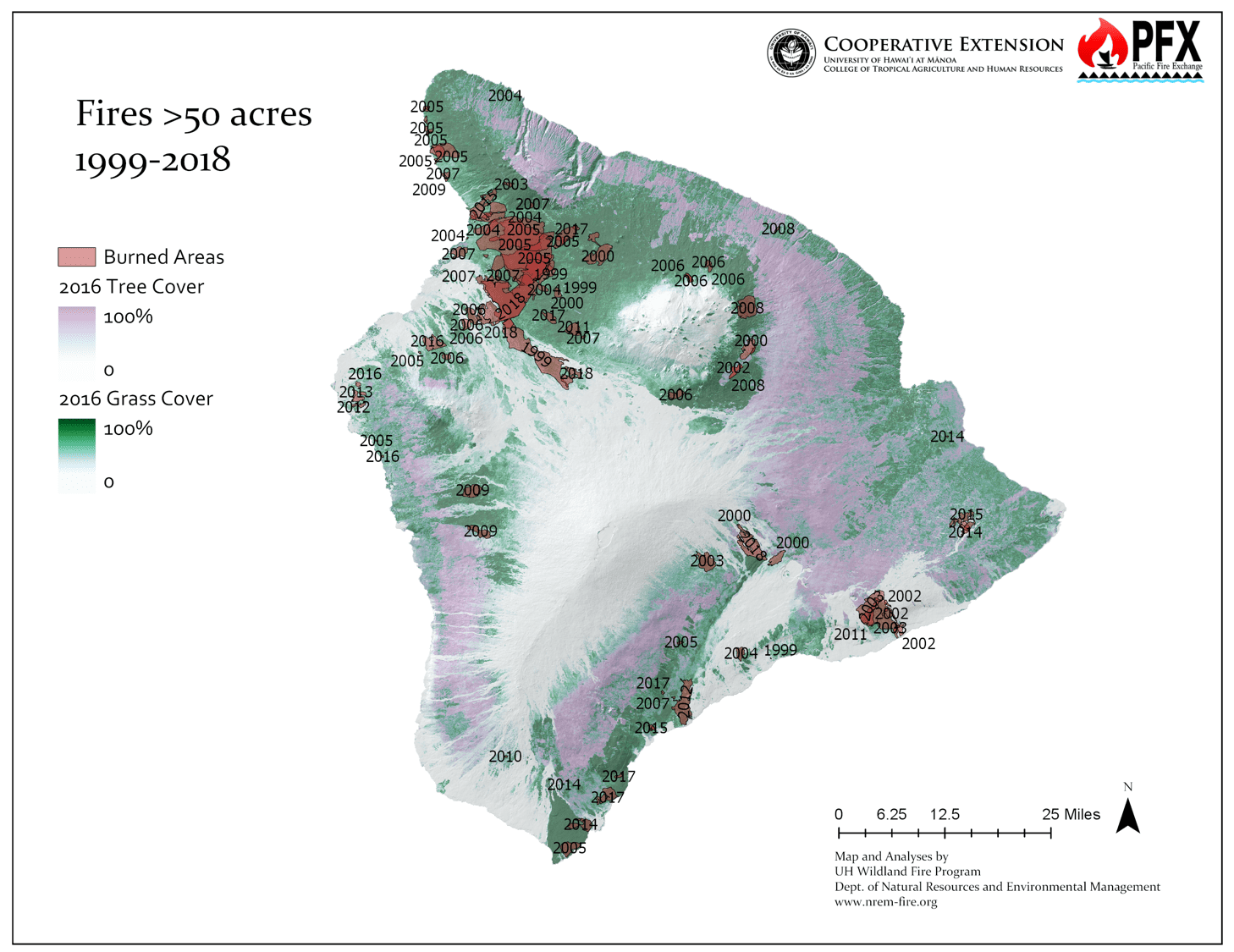
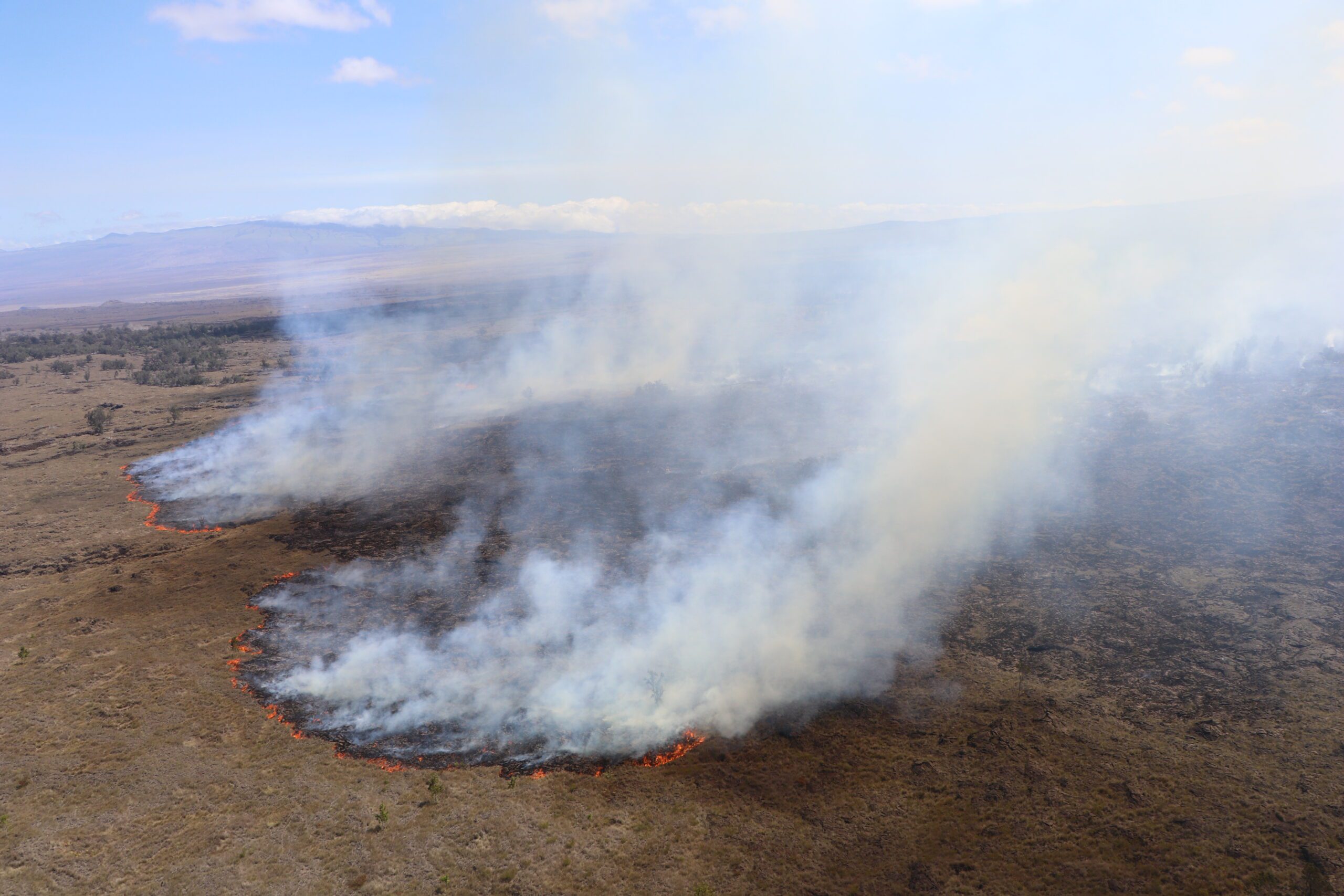
The growing footprint of these grass-dominated fallow agricultural lands combined with increasing human population increases the risk of wildfire across the island. The hazardous vegetation and high number of ignitions is exacerbated by climate change creating more frequent drought conditions.
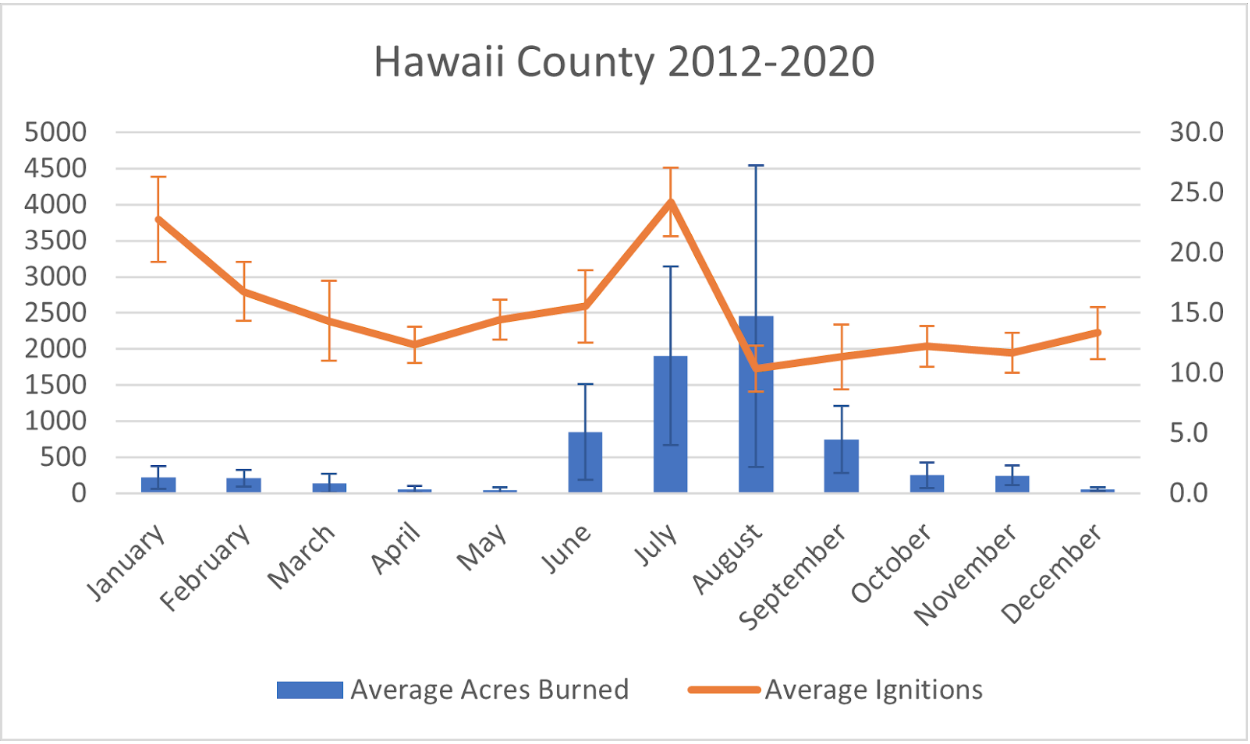
Seasonal variation in rainfall also affects both ignitions and the extent of areas which burn. Particularly wet periods over a rainy season can, counterintuitively, significantly elevate hazard levels. Increased precipitation may lead to a surplus of vegetation growth, becoming potential fuel during subsequent drier periods, thereby elevating the risk of large wildfires. Given the changing wind and rainfall patterns arising from climate change, this may lead to increased risk.
Plans & Images

Recent Resources For Hawai‘i
This project was developed and carried out by SWCA Environmental Consultants (SWCA) to determine the effectiveness of three different methods in reducing the surface fuel loads in a guinea grass (Panicum maximum) dominated community, thereby reducing susceptibly to sustained fires. Three control treatments were tested including mechanical removal, herbicide application and grazing using cattle to reduce the fuel loads at Marine Corps Training Area Bellows (MCTAB), on the island of O‘ahu, Hawai‘i. Information on the cost of the various control treatments and their long-term effectiveness in maintaining reduced fuel loads would also benefit land and resource managers in the Pacific Islands where guinea grass and frequent fires are problematic.
Authors Hanna L. Mounce, Fern Duvall and Kirsty J. Swinnerton consider the effects of a massive brush fire in January 2007 on the endangered ‘Alauahio forest bird population in Polipoli including possible effects on foraging, breeding and reproduction.
The project was developed by US Army Garrison (HI) primarily as a pilot study to assess the use of livestock to manage vegetation growth at Mākua Military Reservation (MMR) on the island of O‘ahu, Hawai‘i. The objective was to determine the feasibility of reducing grass height to a range of 3 to 19 inches, and thereby reduce the threat of catastrophic wildfires on these important training lands as well as adjacent non-military lands.