
Hawai‘i Island
Hawaiʻi Island is unique in that it is the only Hawaiian island with ongoing active volcanic eruptions. However, humans are still by far the leading cause of wildfire ignitions. The majority of wildfires on Hawaiʻi Island are caused by human error or arson, especially near developments, power line right of ways, and along roadsides.
Fire Today
Rainfall follows the typical pattern of the Hawaiian Islands, with more rain along the eastern windward coast. Mauna Kea and Mauna Loa create a rain shadow that results in drier conditions on the western leeward coasts. Most of the former sugar plantation lands are on the wetter windward side of the island, along the Hāmākua Coast. Despite this location, there is a long history of fires in the area. It was the large 1901 Hāmākua coast fire that was the impetus for keeping wildfire records in Hawaiʻi. >> READ MORE
On the leeward side, the Kohala area is particularly fire-prone. This drier region with large areas of fallow pasture and agricultural land has a high rate of ignitions vis-a-vis human infrastructure, as well as more regular large fires.
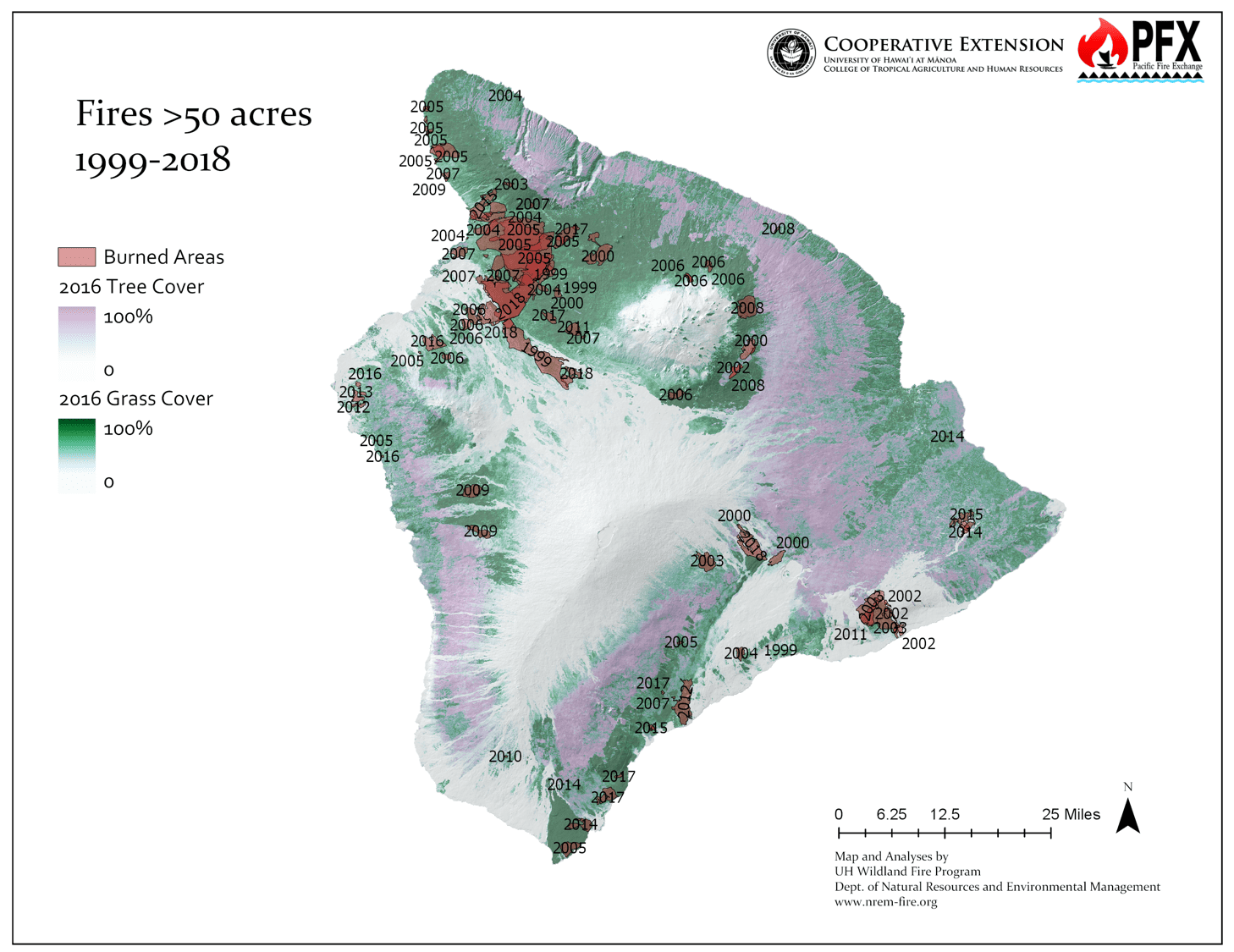
The growing footprint of these grass-dominated fallow agricultural lands combined with increasing human population increases the risk of wildfire across the island. The hazardous vegetation and high number of ignitions is exacerbated by climate change creating more frequent drought conditions.
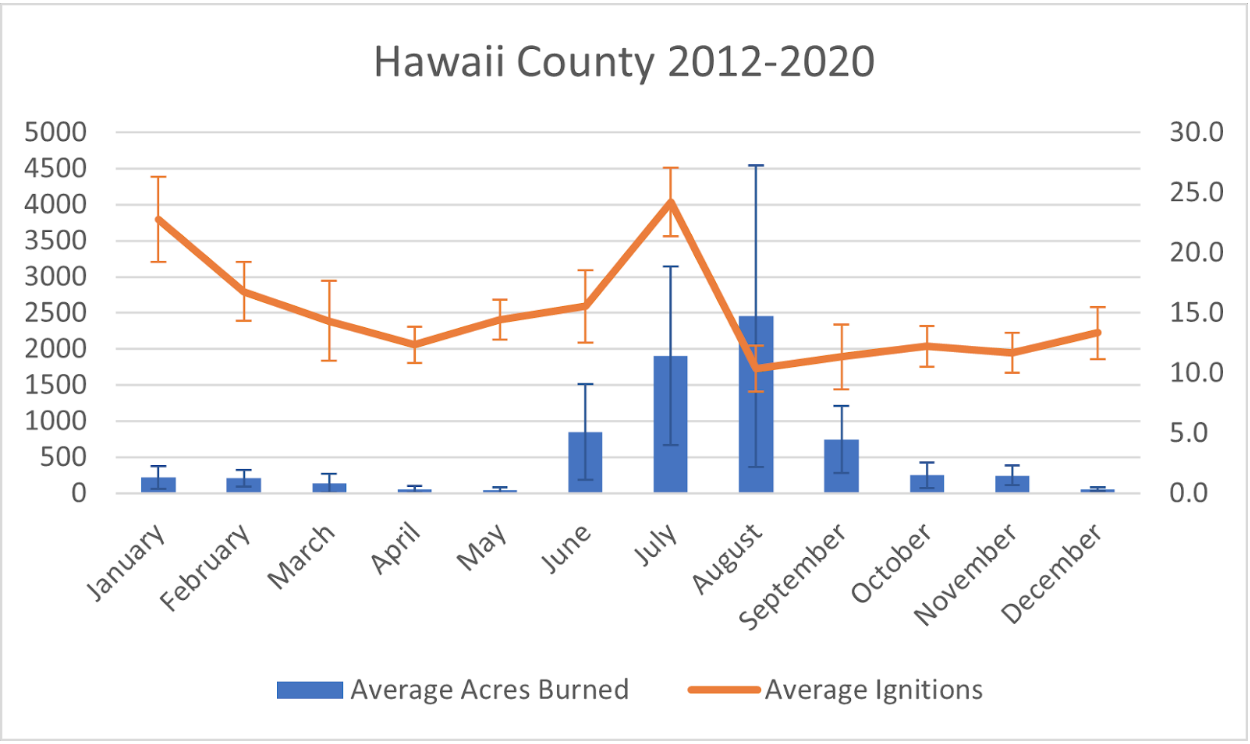
Seasonal variation in rainfall also affects both ignitions and the extent of areas which burn. Particularly wet periods over a rainy season can, counterintuitively, significantly elevate hazard levels. Increased precipitation may lead to a surplus of vegetation growth, becoming potential fuel during subsequent drier periods, thereby elevating the risk of large wildfires. Given the changing wind and rainfall patterns arising from climate change, this may lead to increased risk.
Plans & Images

Recent Resources For Hawai‘i
In September 2003, a wildfire burned about 10 acres of Hawaiian mesic forest on Kumaipo ridge between the Waianae Kai Forest Reserve and Makaha Valley on western Oahu.
Learn the perspectives of Amy Tsuneyoshi and Kaimana Wong from the Honolulu Board of Water Supply (HBWS) and Mikaela Bolling from the Waianae Mountain Watershed Partnership (WMWP) with respect to fire breaks and fire prevention.
Fountain grass is an invasive, highly flammable ornamental plant that has overtaken the dry, tropical ecosystems of west Hawaii. Over the last several decades, large, fast spreading fountain grass fires have burned across the landscape with increasing frequency, usually ignited by roadside activities in remote areas. The Pu’u Anahulu Fuels Management Project evaluated the effectiveness of different roadside fuels treatments on fountain grass using a collaborative approach, and allowed the first use of science-based fuels treatments and prescribed fire in Hawaii. Demonstration sites were established along roadsides where ignitions were known to occur. The clear winner for sustained reduction of fountain grass was a three stage application of prescribed fire, grazing and herbicide.