
Hawai‘i Island
Hawaiʻi Island is unique in that it is the only Hawaiian island with ongoing active volcanic eruptions. However, humans are still by far the leading cause of wildfire ignitions. The majority of wildfires on Hawaiʻi Island are caused by human error or arson, especially near developments, power line right of ways, and along roadsides.
Fire Today
Rainfall follows the typical pattern of the Hawaiian Islands, with more rain along the eastern windward coast. Mauna Kea and Mauna Loa create a rain shadow that results in drier conditions on the western leeward coasts. Most of the former sugar plantation lands are on the wetter windward side of the island, along the Hāmākua Coast. Despite this location, there is a long history of fires in the area. It was the large 1901 Hāmākua coast fire that was the impetus for keeping wildfire records in Hawaiʻi. >> READ MORE
On the leeward side, the Kohala area is particularly fire-prone. This drier region with large areas of fallow pasture and agricultural land has a high rate of ignitions vis-a-vis human infrastructure, as well as more regular large fires.
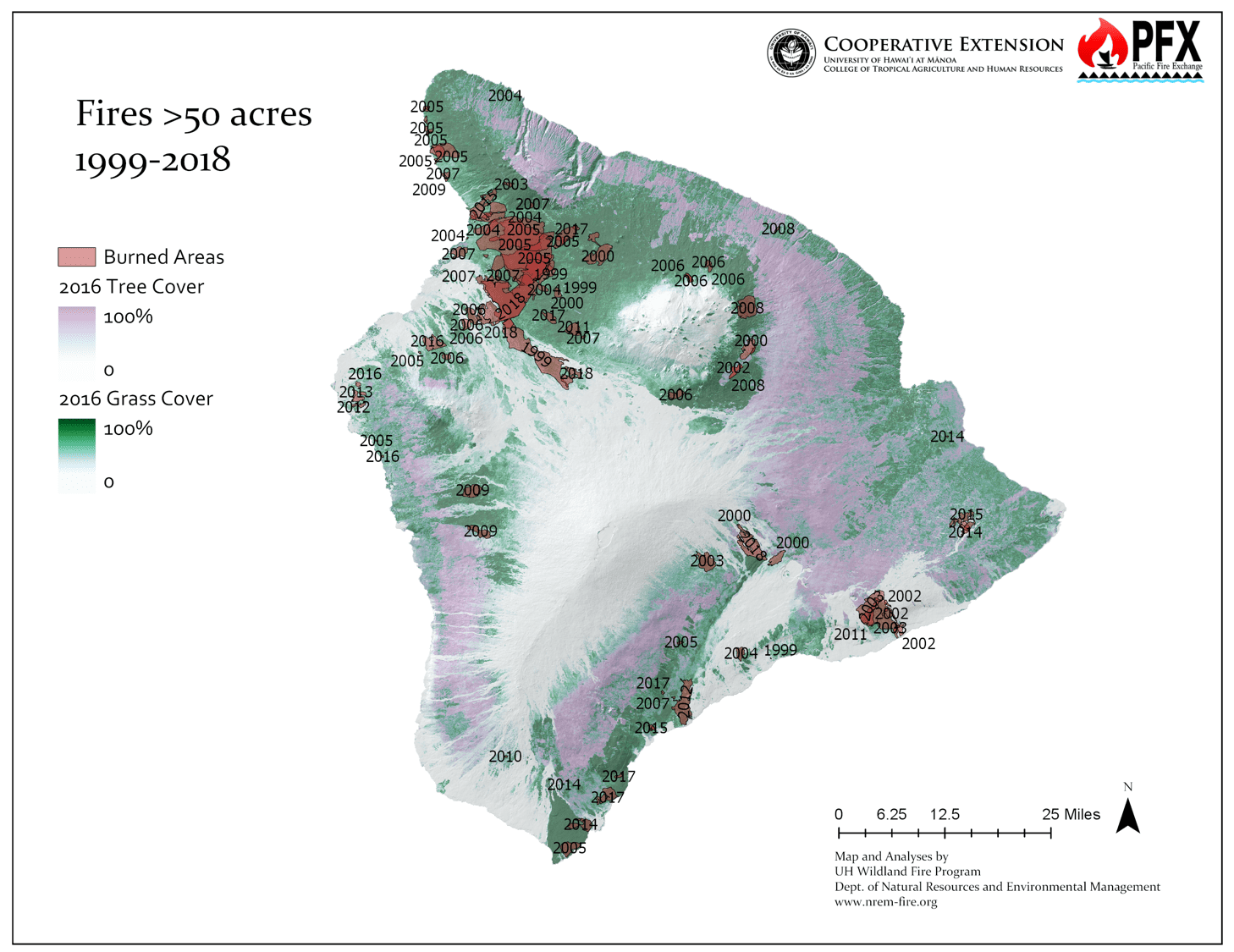
The growing footprint of these grass-dominated fallow agricultural lands combined with increasing human population increases the risk of wildfire across the island. The hazardous vegetation and high number of ignitions is exacerbated by climate change creating more frequent drought conditions.
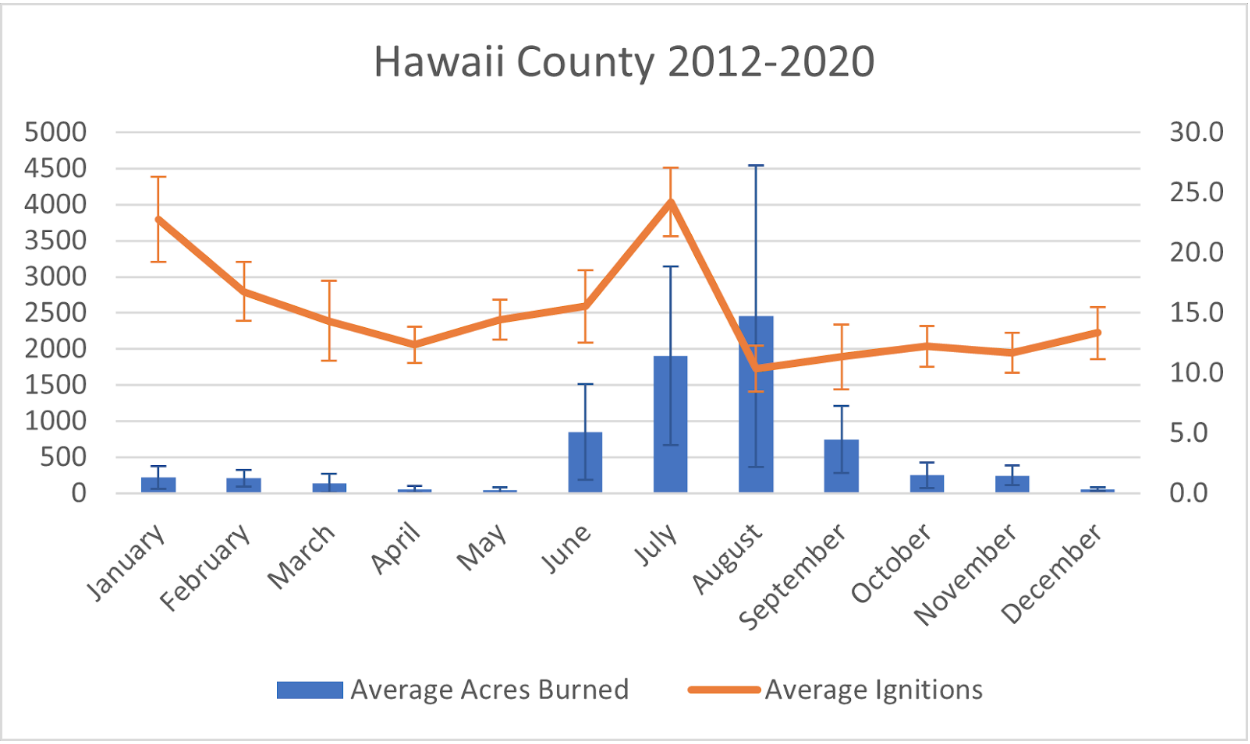
Seasonal variation in rainfall also affects both ignitions and the extent of areas which burn. Particularly wet periods over a rainy season can, counterintuitively, significantly elevate hazard levels. Increased precipitation may lead to a surplus of vegetation growth, becoming potential fuel during subsequent drier periods, thereby elevating the risk of large wildfires. Given the changing wind and rainfall patterns arising from climate change, this may lead to increased risk.
Plans & Images

Recent Resources For Hawai‘i
In this Pacific Fire Exchange talk story Q&A session, we round up the latest research, past and present for managers and landowners wanting to understand more about how our four-legged friends (goats, sheep, cows, etc.) if managed properly can help reduce blazing and wildland fire. This month’s science share out and conversation was with Dr. Clay Trauernicht, University of Hawai`i at Mānoa Ecosystems and Fire Specialist; Raia Olsen of O‘ahu Grazers and Dr. Elliott Parsons, formerly with the Department of Land and Natural Resources. They presented the how-tos on hiring island professional grazers and lessons learned for contract grazing.
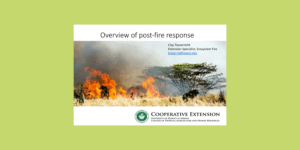
A slide presentation overview by Dr. Clay Trauernicht of best practices for assessing and mitigating after-fire impacts to the environment.
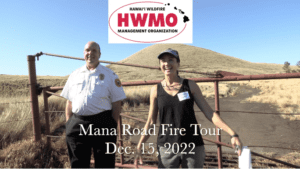
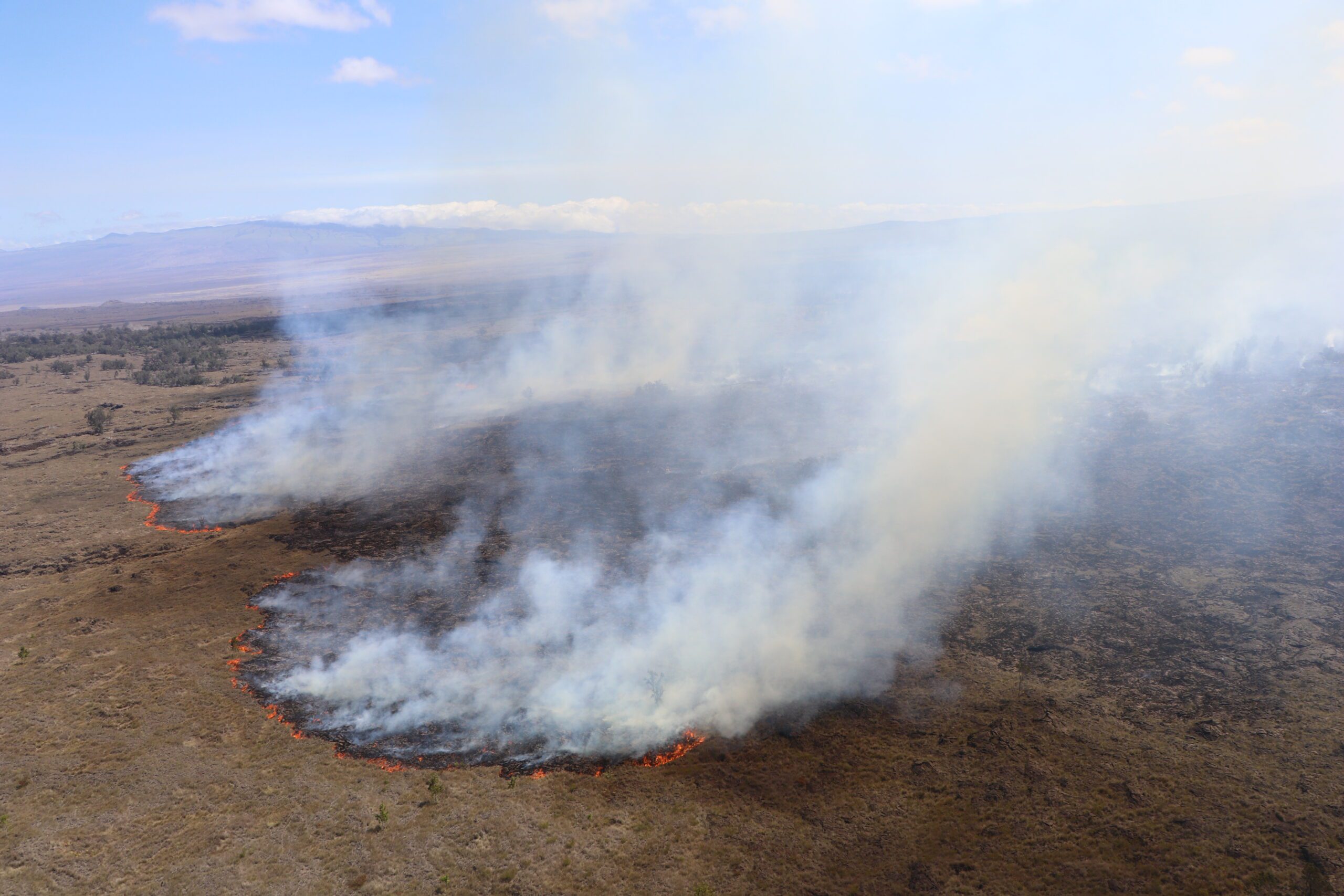
On December 13 -15, 2022 the Hawaiʻi Wildfire Management Organization and wildland fire managers from the western U.S. and Hawaiʻi’s county, state, and federal fire agencies met on Hawai‘i Island. Hawai‘i representatives were able to bring mainland partners up to speed on Hawai‘i’s fire ecology, our mitigation challenges, our collaborative programs to educate and mitigate, and our post-fire stabilization needs and recovery goals via a field tour of one of Hawai‘i’s largest fires in recent history.